Custom Iron Doors vs Stock: The Difference Is Not Just the Price Tag Your Iron Door Is Letting the Cold In: Introducing …
- 402-932-9571
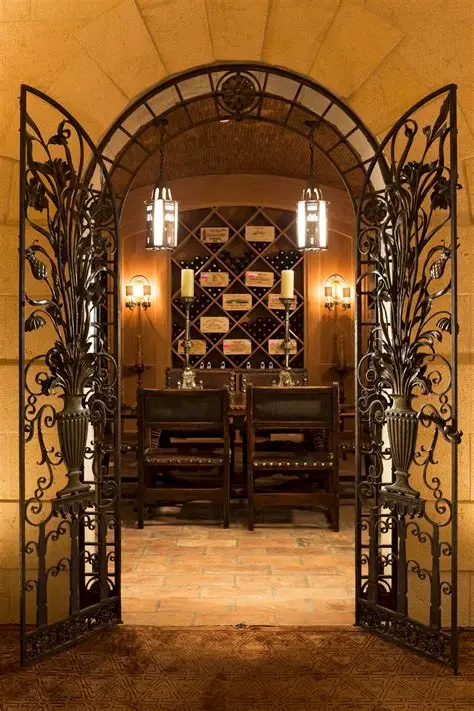
A wrought iron wine cellar door is often the last decision in a project that took years to plan and a significant amount of money to build. The racks, the cooling system, the lighting, the flooring, all considered carefully. Then a generic door gets put in front of it.
The door is the first thing anyone sees. It frames every bottle behind it. Getting it right is worth the same attention you gave everything else in the room.
Here is what to know before you order a wrought iron wine cellar door, including what changes when the door is interior, which is where a lot of specs go wrong.
People Also Ask: What type of door is best for a wine cellar?
For a wine cellar, a wrought iron door holds up better than wood or composite on the dimensions that matter most: it does not warp, absorb moisture, or lose its seal the way they can. Wood moves under the temperature and humidity cycling a wine cellar produces, even when it is well sealed, and a warped door loses its seal. Composite materials can hold shape but lack the structural presence and longevity of iron. Iron does not warp, does not absorb moisture, and does not age the way organic materials do. A properly built custom wine cellar door holds its seal, its shape, and its finish for decades without the maintenance demands of wood.
Beyond performance, iron gives the wine cellar what it deserves visually. A collection built over years and stored behind a considered iron door reads as intentional. The material carries weight, literally and aesthetically, in a way no other door category matches.
People Also Ask: Do wine cellar iron doors need a thermal break?
No. Thermal break technology exists to prevent cold conduction through an iron frame in exterior cold-climate applications. In a wine cellar, the door is interior. The temperature differential the door manages is between the climate-controlled cellar environment and the ambient interior of the home, typically around 55 to 65 degrees Fahrenheit inside the cellar against 68 to 72 degrees in the surrounding space. That differential does not create the condensation and frost conditions that require a thermal break in an exterior cold-climate door.
What an interior iron door does require is a well-fitted weatherstrip and threshold seal. The seal is what maintains the cellar environment and prevents the cool air from bleeding into the surrounding space. A door built to exact dimensions with a properly specified seal performs more consistently than a stock door adjusted to fit the opening. This is also why wine cellar iron doors are typically less expensive than exterior cold-climate doors, because the thermal break component is simply not part of the specification.
People Also Ask: What glass should I use for a wine cellar door?
Glass selection for a custom wine cellar door comes down to two decisions: visibility and insulation.
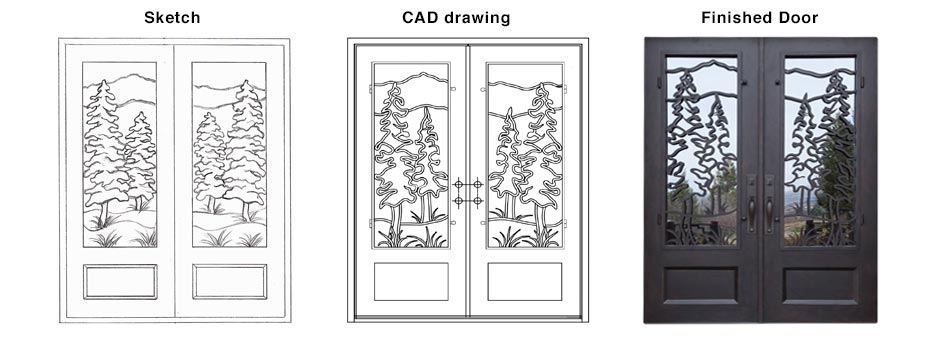
Every wrought iron wine cellar door Midwest Iron Doors builds starts with a shop drawing that specifies the exact glass type, panel dimensions, and frame configuration before production begins.
If your wine cellar is part of a broader home renovation, Precision Enterprises handles full-scope home remodeling across the Omaha metro, the same standard of craftsmanship applied to everything around the cellar door.
The consultation is free. The shop drawing is free. Bring your opening dimensions and your design direction, and we will build the specification that fits the collection you have spent years putting together.
Custom Iron Doors vs Stock: The Difference Is Not Just the Price Tag Your Iron Door Is Letting the Cold In: Introducing …
A wrought iron wine cellar door is the first thing anyone sees. Here is what to specify, glass, seal, and why interior doors skip the thermal break, before you order.
Iron door vs steel door: what separates a stock steel entry from a custom iron door, and which one fits your home.